01 / Lab
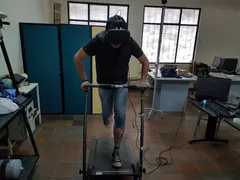
It all starts in the lab, with sensors, a headset and real data.
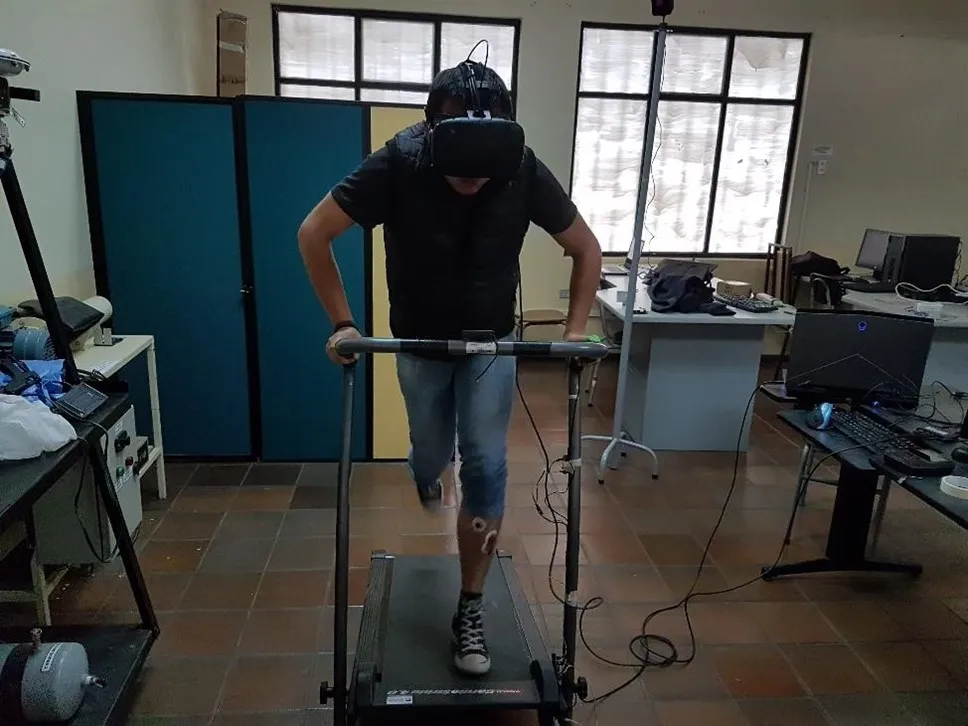
Treadmill with a virtual reality headset and leg sensors

AI, extended reality and simulators that come out of research and work where you need them.
+120immersive technology, artificial intelligence and custom platform projects since 2018
01 / Lab
It all starts in the lab, with sensors, a headset and real data.
Treadmill with a virtual reality headset and leg sensors
02 / Simulation
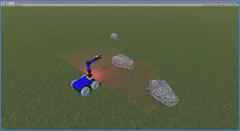
Before going out into the field, the robot learns in simulation.
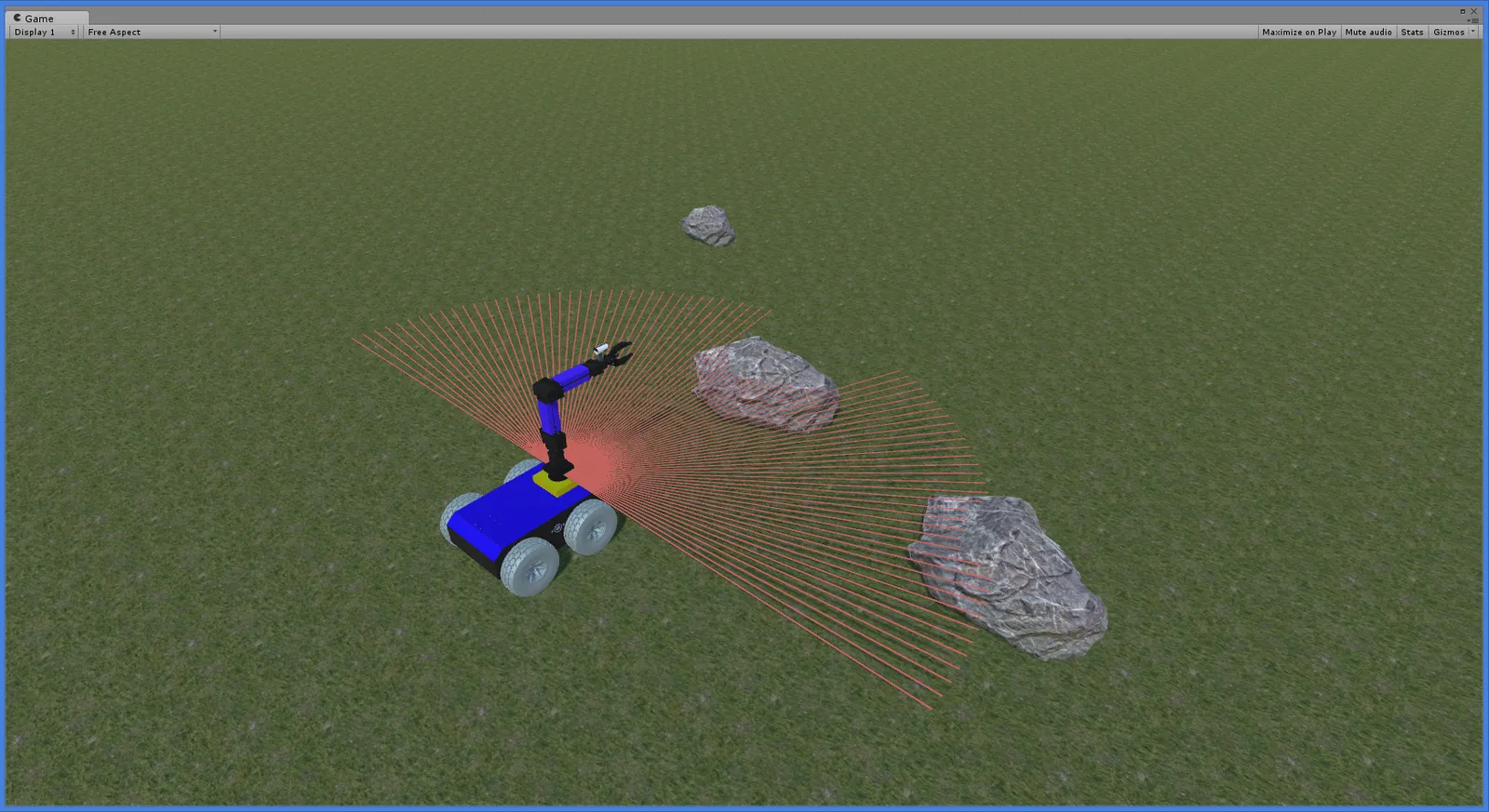
Robot with an arm and a simulated laser sensor in Unity
03 / XR headset
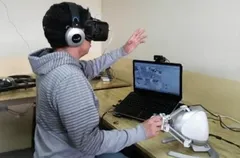
XR headsets put the person inside the system.
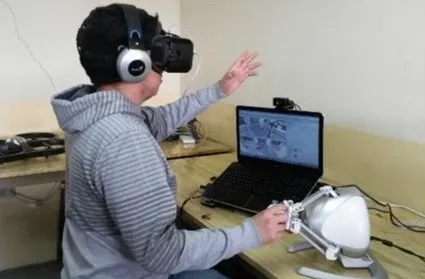
Teleoperation with a headset and a haptic device
04 / Real world
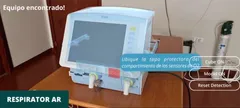
And the solution reaches the real equipment, where it is used every day.
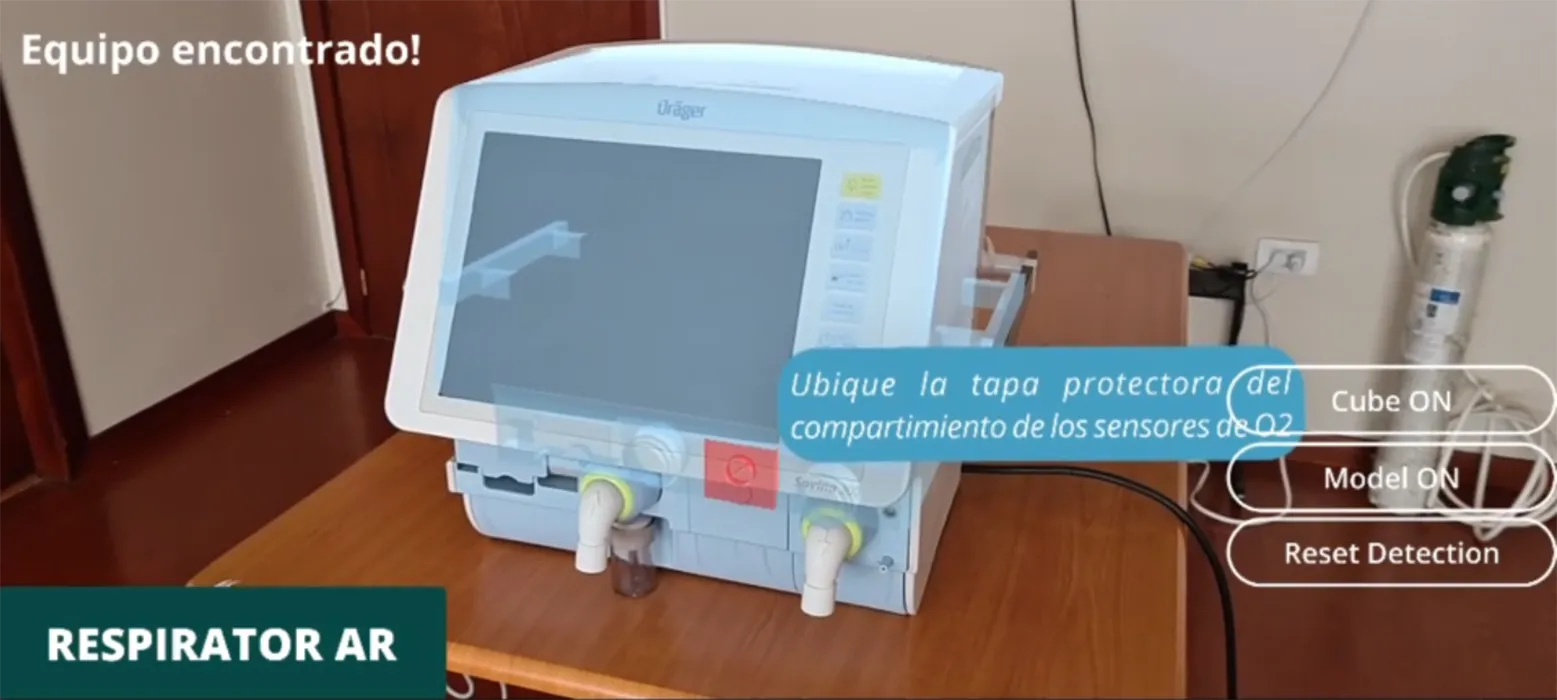
Augmented reality guide over a real ventilator
Universities, industry, technology companies and international organizations have worked with Inmersoft.

Stanford University
AI module for Buscapez, a scientific platform for tuna tagging.

Inter-American Development Bank (IDB)
Development and maintenance of the GoHelp platform (2016–2017).

Arlift
QHSE compliance platform for an oil and gas operator.

Sansar (Linden Lab)
Development work on a social virtual reality platform.

Merge
Augmented reality research and prototypes for the Merge Cube.

Universidad de las Fuerzas Armadas ESPE
Virtual reality and robotics research (ARSI laboratory).

Universidad Técnica de Ambato (UTA)
Virtual reality application for a tourism research project.
Five service lines. Each one starts from a concrete problem.
01
Problem it solvesYou have images, documents or repetitive processes and need reliable decisions, even where there is no internet connection.
Computer vision (on-device and server-side detection and classification), AI assistants that cite their sources, agents and automation.
02
Problem it solvesYou need to train people or show something complex to a large group without exposing them to risk or using real equipment.
Virtual and augmented reality experiences, immersive training, events with synchronized headsets and 360 video production.
03
Problem it solvesYou want to test robots, drones or procedures before taking them into the real world, without damaging equipment or putting anyone at risk.
Robotics simulators, digital twins of drones and robots to test control algorithms, and virtual training environments for safe procedures.
04
Problem it solvesYour processes live in spreadsheets and email, and you need access control, approvals and traceability.
Management systems, regulatory compliance, logistics and platforms with roles, approval workflows and audit trails.
05
Problem it solvesYou have an event or a launch and want people to take part, not just watch.
Games, augmented reality filters and QR activations with live leaderboards for events and launches.
Four cases, each with its challenge, its solution and its results in numbers.
01 / 04
Stanford University, 2026
A computer vision detector trained for the Buscapez platform, which runs directly on iOS and Android phones and also on the server.
An assisted annotation workflow with human review to keep improving the model.
0.96detection precision (mAP50 on the validation set)
49 msinference per image on the server
02 / 04
Pharmaceutical company
A single application for 32 synchronized Meta Quest headsets, with a guided 360 video tour, meditation and an interactive hand-tracking game.
A control panel launches the experience on all headsets at the same time over the local network, keeps them in sync even if one headset loses its connection, and shows each headset’s battery level.
All 360 video footage was shot and edited in-house.
32headsets synchronized in a single session
03 / 04
Research, ESPE and the CEDIA consortium
A real-time robotics simulator that connects Unity and MATLAB.
Bilateral teleoperation of mobile manipulators with haptic feedback.
A link between a real drone and a virtual one for an aerial manipulator.
Virtual reality therapy for children with cerebral palsy.
USD 600,000across 4 funded projects
88citations for the most-cited paper
04 / 04
Arlift, 2025–present
A web platform with roles and permissions, an approval workflow engine, an audit log, an interactive org chart and geospatial maps.
Five compliance modules.
308automated tests
5compliance modules
A clear path from the first conversation to the product in use.
Inmersoft grew out of university virtual reality and robotics labs. That is where our method and our results come from.
30+peer-reviewed publications
640citations
14h-index
21i10-index
More than 30 peer-reviewed publications on virtual reality, robotics simulation and human-computer interaction (Springer, ACM and others).
Most cited
Webcam-based gaze tracking with a 3.97° error and free head movement. The paper is in preparation.
A private generative AI platform that turns image and video models into configurable services, with real-time progress.
An engineering studio that turns lab technology into products people actually use.
Inmersoft is an engineering studio founded in September 2018 in Quito, Ecuador. Since then it has delivered more than 120 projects in immersive technology, artificial intelligence and custom platforms.
Its roots are in research: the work comes from university labs in virtual reality and robotics, and from more than 30 scientific publications. Inmersoft turns that technology into solutions that work in the real world.
Since 2026, Inmersoft has been a consultant to Stanford University on the Buscapez project.
Links

Tell us what you need to solve. We’ll reply with a proposal on how to get started.
You can also write to wxquevedo@inmersoft.com.